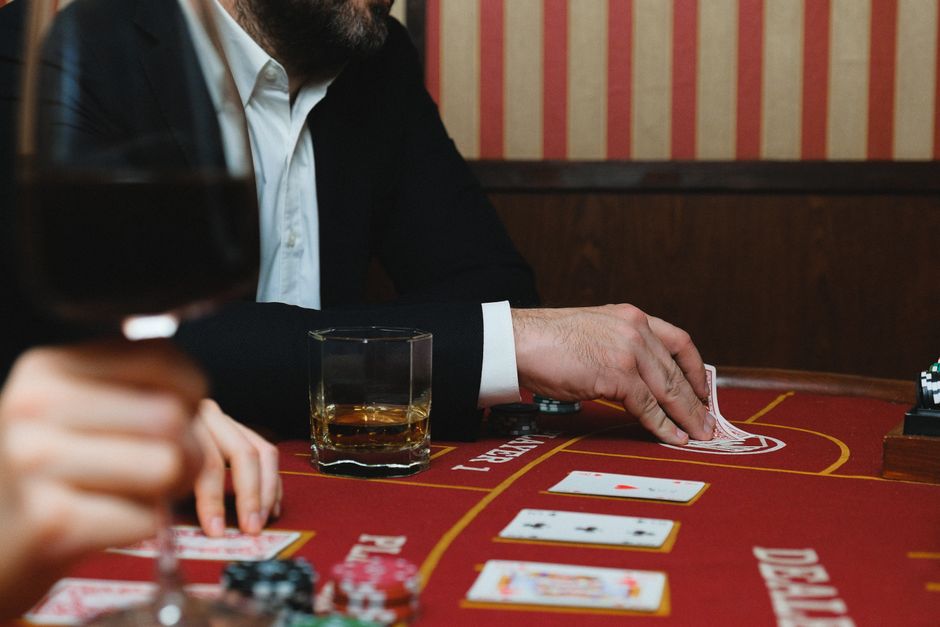


Ask ten people why casinos make money and nine will tell you the same thing: the house always wins. It's a tidy phrase, the kind that gets stitched onto bar signs and repeated at poker tables by people who just lost a buy-in. But it's also lazy. The house doesn't win because it cheats, and it doesn't win because luck is rigged. It wins because of math — specifically, a tiny structural edge applied across millions of bets. Understanding that edge is the difference between being a gambler and being a player.
Whether you're spinning slots at 3 a.m., grinding micro-stakes poker, or placing a Saturday accumulator, the same principles decide your long-term outcome. Let's pull back the curtain.
Every casino game has a built-in mathematical advantage for the operator. This is called the house edge, and it's usually expressed as a small percentage. Roulette is the cleanest example. On a European wheel, there are 37 pockets (1 through 36, plus a single zero). If you bet on red, you have 18 winning pockets out of 37. The payout, though, is even money — 1:1. So you're being paid as if there were 36 pockets when there are actually 37. That missing pocket is the house edge: about 2.7%.
On an American wheel, there's also a double zero. Now there are 38 pockets, but the payout stays the same. The edge jumps to roughly 5.26% — nearly double. Same game, same rules, nearly twice the long-term cost. That single zero pad is why serious roulette players refuse to touch American tables.
The edge doesn't guarantee the casino wins every night. A high roller can hit a hot streak and walk out up six figures. But over enough spins, the math grinds forward like a slow tide. The casino doesn't need to win tonight. It just needs you to keep playing.
Slots are the most popular casino product on earth and the most misunderstood. Modern slot machines aren't mechanical reels with gears — they're random number generators (RNGs) that spin through thousands of outcomes per second, independent of when you hit the button. There's no "due" jackpot, no hidden rhythm, no machine that's "heating up."
What actually matters is the return-to-player percentage, or RTP. An RTP of 96% means that over millions of spins, the machine returns 96 cents for every dollar wagered. That's a 4% house edge. It sounds tiny until you do the arithmetic: at 600 spins an hour and a $1 stake, you're cycling $600 an hour. A 4% edge takes roughly $24 an hour off you in expectation — regardless of whether you win the bonus round. For practical tips, check out 78Win.
Two more numbers matter just as much, and most players ignore them:
Practical tip: pick slots with an RTP of 96% or higher where the game info screen publishes it. In many regulated markets, operators are required to disclose it. If a machine won't tell you, assume the worst.
Poker is different. You're not playing against the casino — you're playing against other people, and the house takes a small cut, the rake. That single fact means poker is the one game on this list where a skilled player can achieve a positive expected value over time.
The rake varies wildly. A 5% rake capped at $3 is brutal in a $1/$2 live game, because the cap gets hit constantly in small pots. Online micro-stakes games often rake 4.5% to 5% with no cap, which quietly devours win rates. The sharper your table, the bigger the rake hurts you. 78 Win offers a practical breakdown of the topic.
Beyond rake, poker rewards a specific skill set that most casino games can't:
If you can't beat your local $1/$2 game after a few hundred hours, the rake and the field are probably beating you. That's information, not failure.
Sportsbooks don't need to predict winners. They make money on the margin between the two sides of a bet, often called the vig or juice. A typical point-spread market might price both sides at -110, meaning you stake $110 to win $100. That built-in overround gives the book about a 4.5% edge on a balanced market.
Multi-leg accumulators — parlays, accas, same-game multis — are where recreational bettors get killed. Each leg multiplies your return, but it also multiplies the bookmaker's margin. A four-leg parlay at -110 pricing carries an effective vig closer to 15–20%. Books love these bets for a reason: they're fun, and they're profitable for the house.
Two habits separate sharper bettors from casual ones:
Strip away the marketing and the picture is clear. Pure chance games — slots, roulette, most table games — are entertainment products with a fixed cost. You don't beat them; you rent them. Poker, sports betting, and a small number of other peer-to-peer formats are competitions where knowledge gives you a fighting chance.
That doesn't make the chance games worthless. A night of blackjack with friends, a small slots session during a football weekend, a lottery ticket for the dream — these are leisure expenses, no different from a concert ticket. The problem starts when people confuse leisure with investment, chase losses because "the machine owes me," or play stakes their bankroll can't survive.
"The house always wins" is true in aggregate but useless in the moment. What actually matters is whether you understand what you're paying to play. Know the RTP of your slot. Know the rake at your poker table. Know the vig on your bet. Set a loss limit before you log in or sit down, and treat it as non-negotiable as rent.
The gamblers who last aren't the ones chasing the jackpot. They're the ones who did the reading first — the ones who realized that the only real opponent at the table is their own bankroll discipline. Beat that opponent, and everything else is just entertainment with better odds than most people admit.

Vivid Manor Living shares practical, down-to-earth guidance on british period property, interiors and garden lifestyle for readers across the UK.


Leave A Comment