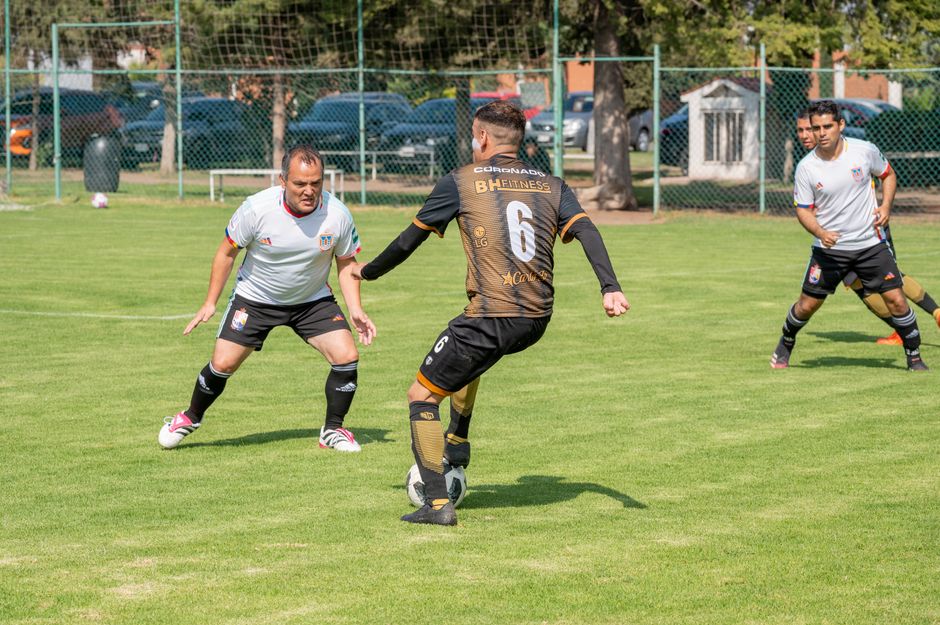


Watch a top-level match with the sound off and focus only on the team without possession. You'll see it: four players shifting as one, a striker angling his run to cut off a passing lane, a midfielder sprinting twenty yards to close a gap that never appeared on the broadcast graphic. That's the press, and it has quietly become the most decisive skill in elite football. Goals get the highlights, but the structures that create them—and the turnovers that spark them—are built in the unglamorous moments when nobody has the ball.
This isn't a tactical lecture for coaches with whiteboards. It's a guide for anyone who wants to understand why their team dominates the ball but loses, or why a supposedly weaker side keeps beating giants. Once you learn to read pressing, football becomes a different game entirely.
Pressing is organized, collective pressure designed to force the opponent into a mistake or a predictable pass. It is not simply running at the ball carrier. A single player charging forward while his teammates hold their shape isn't pressing—it's a gift. The opponent skips past one challenge and suddenly has space where that player should have been.
The defining feature is coordination. When Jürgen Klopp's Liverpool were at their peak, the front three didn't chase randomly. Mohamed Salah and Sadio Mané would curve their runs to push the ball toward a specific side, where Fabinho and Jordan Henderson were waiting to pounce. The press was a trap with a design, not a chase with enthusiasm.
You'll hear two terms constantly:
Most elite teams use both, switching based on scoreline, opponent, and even the minute of the match. A side 1-0 up in the 80th minute rarely presses high; a side chasing a goal almost always does.
Great pressing teams don't run constantly—that's how legs die by February. They wait for triggers, specific cues that signal the moment to strike. Watch for these:
This is why you'll see a winger suddenly sprint at a full-back who just received a pass from his center-back. It's not random effort. The winger read the trigger and the entire midfield shifted with him, closing the central options while the touchline handled the rest.
Analytics have transformed how clubs value defensive work. Metrics like PPDA (passes allowed per defensive action) measure how aggressively a team presses—lower is more intense. In the 2022-23 Premier League season, Brighton under Roberto De Zerbi posted some of the lowest PPDA figures in the league while finishing sixth, a combination that would have seemed impossible for a club of their budget a decade earlier.
Then there's the turnover-to-goal pipeline. Modern analytics teams calculate expected goals generated within a few seconds of a high turnover. The math is stark: possession won in the attacking third is worth several times more than possession won in your own half, because the opponent is disorganized and the distance to goal shrinks dramatically. Teams like Napoli under Luciano Spalletti built entire title runs on this—win it back quickly, attack in five seconds or fewer. There is a useful overview at xoilac.
The best illustration of the principle's power is the 2019-20 Leeds United side in the Championship. They didn't have the division's most talented squad on paper, but their relentless pressing and counter-pressing produced a title and promotion, and the underlying statistics showed they controlled games even when they lost. Effort, organized well, is a skill.
Pressing is a bet. Push too high and you leave acres of space behind the defensive line for a fast striker to exploit. A well-coached opponent will prepare a bypass: one crisp pass over the first line, then a second through the gap where your full-backs have vacated.
The physical toll is brutal, too. Teams that press intensely for 90 minutes often fade late in seasons or suffer injury clusters. That's why squad rotation is non-negotiable for pressing sides, and why managers like Pep Guardiola adjust pressing height based on fixture congestion rather than a fixed philosophy.
There's also the emotional cost of being beaten by it. Nothing deflates a crowd faster than watching their team get pressed into a corner for ten minutes. But here's what experienced supporters know: pressing cannot be sustained indefinitely. If your team survives the storm and keeps the score level, the game usually opens up in the second half as the pressing side's legs slow. Patience is a legitimate counter-tactic.
Try this on your next watch. Every time the opponent's center-back receives the ball, count how many of your team's players move toward him within two seconds. If the answer is one, that's a chase. If it's three or four, with a midfielder covering the pass into the center, you're watching a rehearsed press.
Also watch the player farthest from the ball. The striker who runs away from the play, blocking the switch pass to the far side, is doing the least visible and most important work on the pitch. Broadcast cameras hate him. Coaches adore him.
And listen for the crowd. A genuinely good press produces a sound before the turnover—a rising murmur as the trap closes, then a roar when the ball is won. If you've ever felt that wave of noise without quite knowing why, now you do.
The next time your team concedes a sloppy goal and everyone blames the center-back who failed to clear, rewind thirty seconds. You'll usually find the real story: a striker who couldn't be bothered to close the goalkeeper's passing lane, a midfielder jogging back while his opponent sprinted into the space, a press that broke because one player didn't shift four feet to the left.
Football's most romantic narratives are still about goals, and they always will be. But the game's intellectual core now lives in the collective hunt—the choreography of eleven players making the pitch small for the opponent and enormous for themselves. Whether you're cheering a Premier League giant or a Sunday league side, the principle holds: teams that understand when to press, and trust each other enough to do it together, win games they have no business winning. Watch the ball, sure. But this weekend, spend ten minutes watching the players who don't have it. That's where the match is actually being decided.

Vivid Manor Living shares practical, down-to-earth guidance on british period property, interiors and garden lifestyle for readers across the UK.


Leave A Comment